Music for SATB chorus, trombone and piano by Pamela J. Marshall
The Future of Life: Notes
Notes on the movements
The table displays the Instrumentation and duration of each movement.
1. Invocation |
SATB (wordless), trb, pno |
2’ |
SATB, trb, pno |
5’20 |
|
SATB, trb, pno |
4’ |
|
SATB, trb, pno |
3’ |
|
5. Interlude |
trb, pno |
1’30 |
6. A Bequest |
SATB, trb, pno |
3’30 |
7. Bee-Song |
SATB, pno |
3’30 |
SATB, trb, pno |
5' |
|
Total duration |
~28' |
1. Invocation
Solo trombone, mainly accompanied by wordless chorus. A descending minor third is a key interval in the invocation and throughout the piece. The mood is bold and declamatory with an underlying sense of mourning.
2. Bottleneck: A Letter to Henry
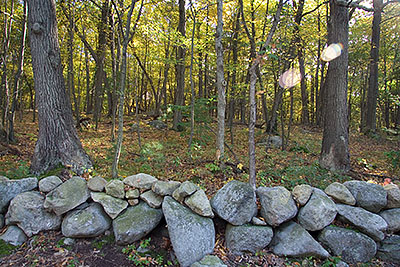 In the Prologue to the book, Dr. Wilson
writes a conversational letter to Henry Thoreau, outlining
humanity’s situation. It is both a lament for how close we are
to “a bottleneck of overpopulation and wasteful
consumption” and a vision of how we might find a workable
balance if we can readjust our goals and actions. He writes,
“Surely the rest of life matters. Surely our stewardship is
its only hope.” The opening music is aggressive, biting out
accusingly at science and technology for bringing us to the brink.
The chorus speaks of the conservation ethic that comes from
Thoreau’s writings and sings with equal intensity,
counterbalancing the aggressive opening, that “in wildness is
the preservation of the world.”
In the Prologue to the book, Dr. Wilson
writes a conversational letter to Henry Thoreau, outlining
humanity’s situation. It is both a lament for how close we are
to “a bottleneck of overpopulation and wasteful
consumption” and a vision of how we might find a workable
balance if we can readjust our goals and actions. He writes,
“Surely the rest of life matters. Surely our stewardship is
its only hope.” The opening music is aggressive, biting out
accusingly at science and technology for bringing us to the brink.
The chorus speaks of the conservation ethic that comes from
Thoreau’s writings and sings with equal intensity,
counterbalancing the aggressive opening, that “in wildness is
the preservation of the world.”
3. Pay Mother Her Due
Chords of minor thirds ring out over a deep bass line and a trombone recitative transforms some of the music from the opening Invocation. The chorus sings, in a recitative style, about how easy it is to ignore species as they disappear. Then the music breaks into a fast and funky bass “Pay now or pay later”. In several verses, there are various plans for action now, versus a final option – do nothing – which is the most costly choice.
4. How Spiders Came to Hawaii
In this gentle, whimsical text, spiders get instructions on how to spin out a parachute and ride the wind. The trombone-and-piano introduction is lilting staccato and tenuto melodic fragments, my take on the texture of sounds in a meadow or forest.
5. Interlude
Trombone and piano continue the sound texture of the forest in a short interlude, with fragments from the Invocation and the minor-third motive.
6. A Bequest
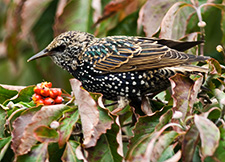 What do we
leave future generations if we continue to exploit the Earth’s
resources beyond its ability to regenerate? All that’s left
might be “the synthetic jungles of Hawaii” and a
“scrubland where once thrived the prodigious Amazon
forest”. Perhaps we also bequeath the challenge of recreating
a functioning natural world. Much of this bequest is declaimed in
unison and octave singing, making the severity of the situation
clearly stated.
What do we
leave future generations if we continue to exploit the Earth’s
resources beyond its ability to regenerate? All that’s left
might be “the synthetic jungles of Hawaii” and a
“scrubland where once thrived the prodigious Amazon
forest”. Perhaps we also bequeath the challenge of recreating
a functioning natural world. Much of this bequest is declaimed in
unison and octave singing, making the severity of the situation
clearly stated.
7. Bee-Song
Things may seem dire, but there is much cause for hope. As Thoreau taught us, many people in the world know there is much to value in the natural world, including the nourishment it brings our spirit. “Bee-Song” with text by Anne Baring is a beautiful hymn to this nuturing. The hive, the Earth, is our Mother, protecting and nourishing us.
8. Grand Grand Mother is returning
 I am hopeful that we
will achieve a balance so that the natural world will remain rich
and beautiful, to sustain us and enrich our spirits. “Grand
Grand Mother is returning” celebrates that continuity of
natural processes - “the egg is always getting laid and
laying” and human concepts too - “truth is being found
and finding”. I believe in this energetic, rhythmic music to
propel us forward from dire warnings of an ominous future to hope
and positive action.
I am hopeful that we
will achieve a balance so that the natural world will remain rich
and beautiful, to sustain us and enrich our spirits. “Grand
Grand Mother is returning” celebrates that continuity of
natural processes - “the egg is always getting laid and
laying” and human concepts too - “truth is being found
and finding”. I believe in this energetic, rhythmic music to
propel us forward from dire warnings of an ominous future to hope
and positive action.
Acknowledgements
This choral music is inspired by the book "The Future of Life" by Edward O. Wilson
Texts of Bottleneck: A Letter to Henry, Pay Mother Her Due,
How Spiders Came to Hawaii, A Bequest
Text adapted
from "The Future of Life" by Edward O. Wilson ,
©2002, published by Vintage Books, and used with his kind
permission.
Text of Bee-Song
"The Song" by Anne
Baring, first published 1996 in "The Divine Feminine" by
Anne Baring and Andrew Harvey, and used with the kind permission of
Anne Baring.
Text of Grand Grand Mother is returning
"Grand Grand Mother is returning" by Judy Grahn from her
book-length poem, The Queen of Wands.
Back to Future of Life Spindrift Home